Intelligent Production Automation: A Complete Guide for Automotive Manufacturing
The automotive manufacturing landscape is undergoing a fundamental transformation as industry leaders like Toyota, Ford, and Volkswagen race to implement advanced automation technologies that go beyond traditional mechanization. While robotic assembly lines have been a fixture on factory floors for decades, today's Intelligent Production Automation represents a quantum leap forward—integrating artificial intelligence, machine learning, and real-time data analytics to create self-optimizing production systems. For manufacturers facing mounting pressures from supply chain disruptions, rising labor costs, and increasingly complex multi-tier supplier networks, understanding and implementing these intelligent systems has shifted from competitive advantage to operational necessity. This comprehensive guide breaks down what Intelligent Production Automation actually means in practical terms, why it matters for your facility, and how to begin your implementation journey with confidence.
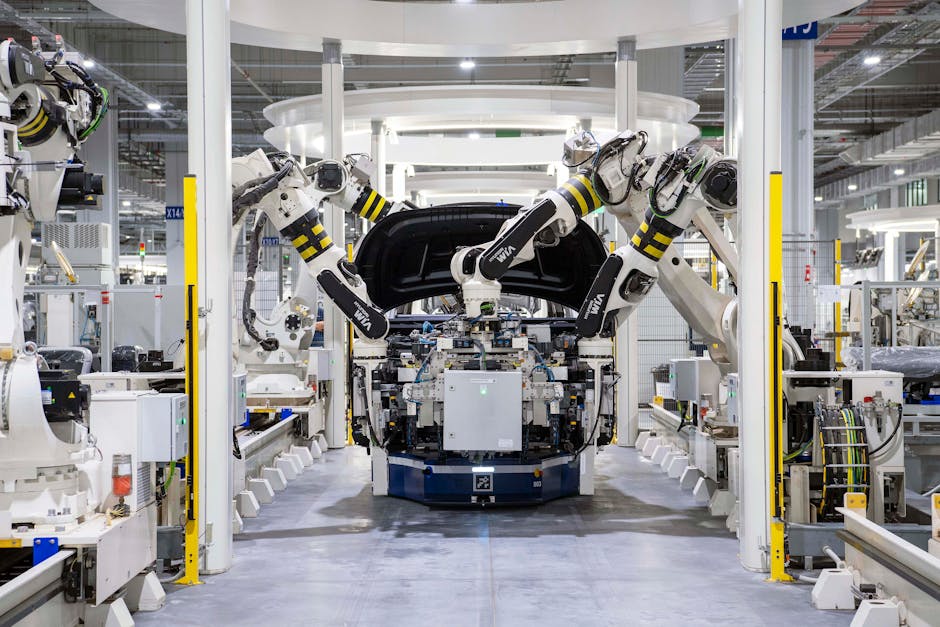
At its core, Intelligent Production Automation differs from conventional automation through its ability to learn, adapt, and make decisions with minimal human intervention. Traditional automation executes pre-programmed instructions repeatedly—a robotic arm welding the same joint thousands of times per shift. Intelligent systems, by contrast, continuously analyze production data, identify patterns, predict equipment failures before they occur, and autonomously adjust parameters to optimize output quality and efficiency. In automotive manufacturing specifically, this means production lines that can dynamically respond to variations in material properties, automatically compensate for tool wear, and even coordinate with upstream and downstream processes to minimize bottlenecks. The integration of computer vision systems enables real-time quality inspection at speeds impossible for human QA teams, while predictive maintenance algorithms drastically reduce unplanned downtime that has traditionally plagued high-volume manufacturing operations.
Understanding the Foundation: What Makes Production Automation Intelligent
The distinction between basic automation and Intelligent Production Automation lies in three fundamental capabilities: perception, cognition, and adaptation. Perception involves the comprehensive collection of data from multiple sources across the production environment—IoT sensors monitoring equipment temperature and vibration, computer vision systems inspecting component dimensions, ERP systems tracking material flow, and MES platforms recording cycle times and yield rates. This sensory layer creates a digital twin of your physical production floor, providing real-time visibility into every aspect of manufacturing operations. For automotive plants running just-in-time production schedules, this visibility becomes critical for maintaining the tight coordination required between stamping, body shop, paint, and final assembly operations.
Cognition represents the analytical engine where collected data transforms into actionable intelligence. Machine learning algorithms identify correlations between process parameters and quality outcomes that human engineers might never detect through traditional statistical process control methods. For example, an intelligent system might discover that a specific combination of ambient humidity, material batch characteristics, and tool age predicts paint defects with 94% accuracy—enabling preemptive adjustments before defective units reach the inspection station. Advanced analytics also power sophisticated production scheduling algorithms that balance competing priorities: minimizing changeover time, maximizing OEE, maintaining optimal inventory levels, and meeting customer delivery commitments. These cognitive capabilities leverage the same Digital Manufacturing principles that have enabled industry leaders to achieve remarkable improvements in first-pass yield and cycle time reduction.
Adaptation closes the loop by enabling systems to act on insights autonomously or through guided human intervention. Smart Factory Integration allows production equipment to receive optimization recommendations and implement approved changes without requiring manual parameter updates at each machine controller. Adaptive systems continuously refine their models based on outcomes, becoming more accurate and effective over time. In practice, this might manifest as a stamping press that automatically adjusts forming pressure based on subtle variations in incoming steel coil properties, or an assembly station that modifies torque specifications when it detects a supplier has made minor dimensional changes to a fastener. This self-optimizing behavior fundamentally changes the role of production engineers from reactive problem-solvers to strategic overseers managing by exception.
Why Intelligent Production Automation Matters for Automotive Manufacturing
The automotive industry faces unique pressures that make Intelligent Production Automation particularly valuable. Vehicle complexity has exploded with the integration of advanced driver assistance systems, electric powertrains, and connected vehicle technologies—the modern automobile contains over 30,000 individual parts coordinated across global supply chains spanning hundreds of suppliers. Managing this complexity through traditional manufacturing approaches strains human capability and creates vulnerability to the supply chain disruptions that have become increasingly frequent. Intelligent automation provides the computational horsepower necessary to orchestrate this complexity, maintaining production flow even when disruptions require rapid replanning and resource reallocation.
Labor challenges represent another critical driver for automation adoption. Skilled manufacturing workers are increasingly difficult to recruit and retain, particularly for specialized roles requiring deep technical knowledge of processes like welding, painting, or quality inspection. The demographic reality of retiring baby boomers compounds this challenge, creating knowledge transfer risks as experienced personnel leave the workforce. Intelligent Production Automation helps mitigate these risks by codifying expert knowledge into algorithms and decision support systems. A vision-based inspection system trained by master quality inspectors can apply their expertise consistently across three shifts, seven days per week, without fatigue or variability. Similarly, AI-powered manufacturing solutions can guide less experienced operators through complex setup procedures, reducing the skill level required for certain roles while simultaneously improving consistency and reducing training time.
Regulatory Compliance and Quality Imperatives
Automotive manufacturers operate under stringent regulatory requirements covering emissions, safety, and quality standards. Meeting these requirements demands exceptional process control and comprehensive traceability—every component must be tracked, every critical parameter recorded, and any deviation from specification documented and investigated. Intelligent Production Automation excels at maintaining the rigorous documentation required for FMEA studies, capability analyses, and regulatory audits. Automated data collection eliminates transcription errors and provides objective, timestamped records of actual process conditions rather than relying on operator logs that may be incomplete or inaccurate. When quality issues do arise, intelligent systems enable rapid root cause analysis by correlating defects with process conditions, material batches, and equipment states across potentially thousands of variables.
The economic imperatives driving automation adoption are equally compelling. Global competition and commoditization pressure automotive manufacturers to continuously reduce unit costs while improving quality—a combination that seems paradoxical through traditional approaches. Intelligent Production Automation resolves this paradox by simultaneously reducing labor costs, minimizing scrap and rework, improving asset utilization, and reducing energy consumption. Industry data shows that facilities implementing comprehensive intelligent automation programs typically achieve 15-30% reductions in manufacturing cost per unit while simultaneously improving quality metrics. For high-volume automotive production where margins are measured in percentage points, these improvements directly impact profitability and competitive positioning.
Getting Started: A Practical Roadmap for Implementation
Launching an Intelligent Production Automation initiative can feel overwhelming given the breadth of technologies involved and the significant organizational change required. Successful implementations follow a structured approach that builds capability progressively while delivering measurable value at each stage. The first step involves conducting a comprehensive assessment of your current state—documenting existing equipment, identifying data sources and gaps, evaluating workforce capabilities, and mapping processes to identify high-value automation opportunities. This assessment should engage stakeholders across engineering, operations, quality, IT, and maintenance to build a complete picture of both opportunities and constraints.
Pilot project selection represents a critical early decision that can make or break momentum for your automation program. The ideal pilot balances technical feasibility with business impact—complex enough to demonstrate real value but not so ambitious that it faces overwhelming technical or organizational barriers. Many automotive manufacturers begin with predictive maintenance applications because they deliver clear ROI through reduced unplanned downtime, leverage existing sensor infrastructure, and don't require complex integration with production control systems. Alternative starting points include automated visual inspection for specific defect types, energy optimization for paint ovens or HVAC systems, or production scheduling optimization for specific manufacturing cells. The key is selecting an application where success is measurable, achievable within 3-6 months, and creates stakeholder enthusiasm for expanding the program.
Building the Technology Foundation
Successful Intelligent Production Automation requires robust infrastructure spanning connectivity, computing, data management, and security. Many automotive plants operate with fragmented IT/OT environments where production equipment runs on isolated networks with limited data accessibility. Creating the foundation for intelligent automation means establishing secure, reliable connectivity that enables data flow from shop floor equipment to analytical platforms while maintaining the network segmentation necessary for operational safety and cybersecurity. This often involves deploying industrial IoT gateways that bridge between legacy equipment protocols and modern data platforms, implementing time-series databases optimized for sensor data, and establishing data governance frameworks that ensure data quality and accessibility.
Computing infrastructure must support both real-time processing for immediate control decisions and batch processing for historical analysis and model training. Edge computing platforms deployed at or near production equipment enable low-latency processing for applications like vision inspection or adaptive process control where millisecond response times are critical. Cloud or on-premise data centers provide the computing horsepower for training machine learning models, running complex simulations, and generating enterprise-wide analytics. Many organizations adopt hybrid architectures that leverage edge computing for real-time operations while synchronizing data to centralized platforms for broader analysis and model development. Lean Manufacturing AI applications particularly benefit from this architecture, as they require both immediate feedback loops for continuous improvement and longitudinal analysis to identify systemic optimization opportunities.
Overcoming Common Implementation Challenges
Even well-planned Intelligent Production Automation initiatives encounter obstacles that can derail progress or limit value realization. Change management consistently emerges as the most significant challenge—production workers and supervisors may view automation as threatening their jobs or undermining their expertise. Addressing these concerns requires transparent communication about automation objectives, involving workers in implementation planning, and demonstrating how automation enhances rather than replaces human capabilities. Successful organizations frame automation as eliminating tedious, repetitive tasks and enabling workers to focus on higher-value problem-solving and continuous improvement activities. Providing training that builds workforce capability in new technologies helps transform potential resisters into automation advocates.
Data quality issues frequently surface as a limiting factor for intelligent automation projects. Machine learning algorithms are only as good as the data they're trained on—incomplete, inaccurate, or inconsistent data produces unreliable models that undermine confidence in automation systems. Establishing data quality requires implementing validation rules, standardizing data collection procedures, and often investing in additional sensors or inspection equipment to fill gaps in available information. Organizations should expect to spend significant effort on data preparation and quality improvement, particularly in early automation projects. The good news is that data quality improvements benefit the entire organization, enabling better decision-making even beyond specific automation applications.
Integration Complexity and Legacy Systems
Automotive plants typically contain a heterogeneous mix of equipment spanning multiple generations of technology—modern CNC machines with standard communication protocols coexist with decades-old hydraulic presses that offer minimal digital connectivity. Integrating Intelligent Production Automation across this diverse landscape requires flexible approaches that can accommodate different levels of equipment sophistication. Retrofit sensors can add intelligence to legacy equipment, protocol converters enable communication with older controllers, and manual data entry workflows can temporarily fill gaps until equipment upgrades become feasible. The key is accepting that comprehensive automation is a journey measured in years, not months, and that initial implementations will inevitably involve some workarounds and compromises.
Vendor selection and partnership represent another critical success factor. The intelligent automation ecosystem includes specialized vendors for machine vision, predictive analytics, production scheduling, robotics control, and numerous other capabilities. Navigating this landscape requires clearly defining requirements, conducting thorough vendor evaluation, and establishing partnerships with vendors who understand automotive manufacturing requirements and can provide ongoing support. Many organizations find value in working with systems integrators who can architect comprehensive solutions drawing on best-of-breed components from multiple vendors while taking responsibility for overall system integration and performance. Investing time in vendor selection and relationship management pays dividends throughout implementation and into long-term operations.
Measuring Success and Scaling Your Program
Establishing clear metrics for Intelligent Production Automation initiatives ensures accountability and provides the objective evidence needed to secure ongoing investment and organizational support. Metrics should span multiple dimensions including operational performance (OEE, cycle time, yield), financial impact (cost reduction, ROI), quality outcomes (defect rates, rework costs), and organizational capability (workforce skill development, time to implement new automation). Leading manufacturers establish baseline measurements before implementation and track progress through dashboards that provide visibility to stakeholders at all organizational levels. Celebrating wins—even incremental improvements—builds momentum and reinforces the value proposition for continued automation investment.
Scaling from successful pilots to enterprise-wide deployment requires systematizing the implementation approach. Organizations develop playbooks that document proven architectures, standard components, implementation methodologies, and lessons learned from early projects. Centers of excellence bring together expertise in data science, automation engineering, and process optimization to support implementation teams across multiple facilities. As automation capabilities mature, the focus shifts from proving feasibility to optimizing performance—refining algorithms, expanding applications to new use cases, and integrating automation more deeply into standard operating procedures and continuous improvement programs. This maturity progression transforms Intelligent Production Automation from a special initiative into simply the way manufacturing gets done.
Conclusion: Taking the First Step Forward
Intelligent Production Automation represents a fundamental evolution in how automotive manufacturing will operate in the coming decades. The confluence of maturing AI technologies, declining sensor and computing costs, and intensifying competitive pressures creates both opportunity and urgency for manufacturers to begin their automation journeys. While the technical and organizational challenges are substantial, the roadmap outlined above provides a practical path forward that builds capability progressively while delivering measurable value at each stage. Start with a focused pilot that addresses a high-value use case, build the foundational infrastructure and skills, learn from early implementations, and scale systematically across your operations. The manufacturers who move decisively now will establish competitive advantages that compound over time, while those who delay risk falling permanently behind industry leaders. For organizations ready to take automation to the next level with advanced AI capabilities, platforms like a Generative AI Platform can provide the sophisticated analytical and decision-making tools necessary to extract maximum value from production data and drive continuous operational improvement across the enterprise.


Comments
Post a Comment