Complete Guide: Implementing Production Line Automation From Scratch
Manufacturing facilities across the globe are confronting a defining challenge: how to transition from traditional manual operations to fully integrated automated systems without disrupting existing production schedules or exhausting capital reserves. The journey from a conventional assembly floor to a digitally orchestrated manufacturing execution system demands more than purchasing robotic arms and installing sensors. It requires a methodical, phased approach that respects your current throughput constraints while systematically building the infrastructure for smart factory integration. This tutorial walks you through the entire implementation process, from initial assessment to full-scale deployment, drawing on methodologies proven at facilities run by Siemens, Rockwell Automation, and similar industry leaders.
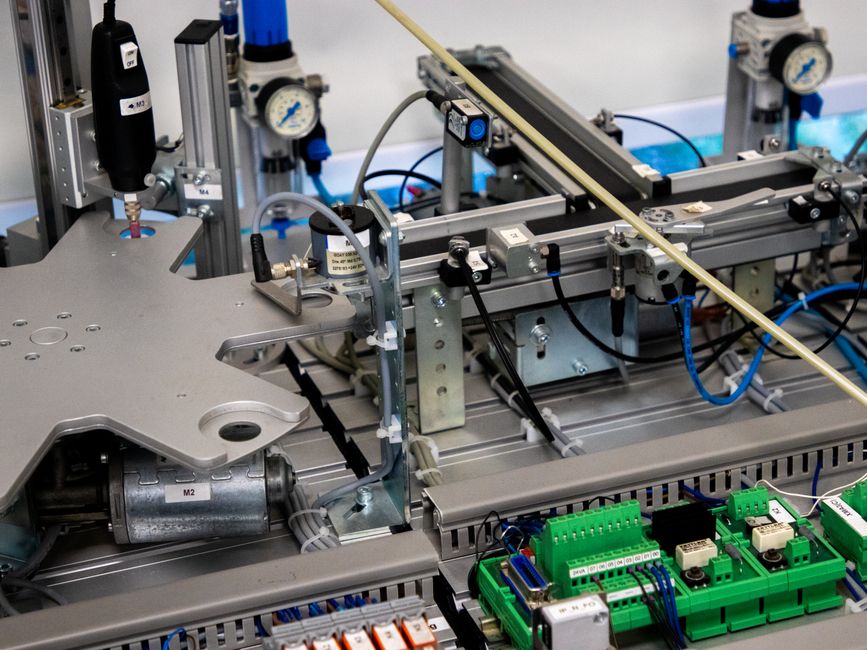
Before investing a single dollar in hardware or software, you need to understand what Production Line Automation will actually solve for your specific operation. Too many manufacturers rush into automation projects with vague goals like "improve efficiency" or "reduce costs" without quantifying current baselines or identifying specific bottlenecks. The result is often expensive equipment that sits underutilized because it was selected based on vendor promises rather than operational reality. Start by documenting your current state: cycle times for each station, defect rates by product line, unplanned downtime events over the past six months, and labor hours per unit produced. This baseline becomes your North Star throughout the implementation journey.
Phase 1: Assessment and Establishing Your Automation Roadmap
Begin with a comprehensive process mining exercise across your entire production operation. Walk the floor with your production supervisors, quality control specialists, and machine operators to identify where manual handoffs occur, where materials queue between stations, and where quality issues originate. Use time-and-motion studies to capture actual cycle times, not theoretical ones. Document every exception: machine changeovers, material shortages, rework loops, and emergency maintenance stops. This granular data reveals your true constraint points.
Next, calculate your Overall Equipment Effectiveness (OEE) for each production line. Most facilities discover their OEE sits between 40% and 60% before automation, meaning massive opportunity exists simply by addressing availability losses, performance losses, and quality losses. Prioritize automation investments that directly impact your lowest OEE components. If unplanned downtime represents your biggest loss factor, predictive maintenance systems should top your list. If performance losses dominate due to minor stops and reduced speed, focus on Smart Factory Integration that enables real-time process adjustments.
Phase 2: Technology Selection and Integration Architecture
With your baseline established and priorities clear, you can now select technologies that address your specific constraints. Resist the temptation to implement a comprehensive digital twin or advanced IIoT platform on day one. Instead, design a phased technology stack that delivers measurable ROI at each stage while building toward your ultimate vision.
Start with foundational infrastructure: industrial-grade networking (typically industrial Ethernet or TSN), edge computing nodes for local data processing, and a centralized manufacturing execution system that can orchestrate across multiple lines. Companies exploring this integration architecture often benefit from specialized AI solution frameworks that accelerate deployment timelines while ensuring compatibility with existing equipment. Select sensors and actuators based on open standards (OPC UA, MQTT) to avoid vendor lock-in and ensure future flexibility.
For Robotic Process Automation components, evaluate your application requirements carefully. Collaborative robots excel in assembly operations where flexibility and human interaction matter. Traditional industrial robots deliver superior speed and precision for repetitive tasks like welding or material handling. Autonomous mobile robots optimize material flow in facilities with complex cross-docking operations or large distances between workstations. Match the technology to the specific process requirement, not the other way around.
Phase 3: Pilot Implementation on a Single Production Line
Never attempt to automate your entire facility simultaneously. Select one production line as your pilot—ideally one that represents typical challenges but isn't mission-critical to the point where failures create catastrophic business impact. This pilot line becomes your learning laboratory where you refine integration procedures, train personnel, and validate your technology selections before scaling across the operation.
Install your core automation hardware: robots, smart sensors, machine vision systems, and edge computing nodes. Configure your manufacturing execution system to monitor the pilot line in real-time, collecting data on cycle times, quality metrics, and machine status. Implement Predictive Maintenance algorithms that analyze vibration data, thermal signatures, and power consumption patterns to forecast equipment failures before they occur. This single capability alone often delivers 15-25% reduction in unplanned downtime.
Establish your data pipeline from shop floor sensors through edge processing to your centralized analytics platform. Implement closed-loop control where real-time data drives immediate process adjustments: if a quality sensor detects dimensional drift, the system automatically adjusts machine parameters or flags the issue for operator intervention. This data-driven process adjustment capability is where Production Line Automation transitions from simple mechanization to genuine intelligent manufacturing.
Phase 4: Operator Training and Process Refinement
Technology implementation is only half the equation. Your operators, technicians, and supervisors must understand how to work alongside automated systems, interpret data dashboards, and respond to system alerts. Develop role-specific training programs: operators need to understand when to intervene versus when to let automated controls manage the process; maintenance technicians require training on predictive maintenance systems and how to use condition-based monitoring data for repair decisions; production supervisors must learn to use real-time analytics dashboards for resource allocation planning and production scheduling decisions.
Run your pilot line in parallel with existing manual operations for at least one full production cycle (typically 2-4 weeks). Compare output quality, throughput rates, and labor requirements between the automated pilot and conventional lines. Document every integration issue, software bug, or unexpected behavior. This parallel operation phase reveals gaps that never appear during testing with sample parts or simplified production scenarios.
Refine your automation logic based on real-world performance. You'll likely discover that your initial robot programming needs adjustment for certain product variants, that sensor thresholds require tuning to minimize false positives, or that your production scheduling algorithms don't account for material staging constraints. Make these refinements iteratively until your pilot line consistently matches or exceeds your baseline performance metrics.
Phase 5: Full-Scale Deployment and Continuous Optimization
With your pilot line validated and refined, you can now replicate the implementation across additional production lines. Develop standardized deployment procedures based on lessons learned during the pilot phase. Create configuration templates for your manufacturing execution system, robot programming libraries for common operations, and maintenance protocols for each equipment type. This standardization dramatically accelerates deployment timelines for subsequent lines—what took three months for the pilot might take only four weeks for line two.
As you scale Production Line Automation across your facility, implement advanced capabilities that require data from multiple lines: supply chain optimization algorithms that balance production rates with material availability and demand forecasts; quality assurance feedback loops that correlate upstream process variations with downstream defect patterns; resource allocation planning that dynamically shifts production between lines based on equipment availability and order priorities. These facility-wide optimizations deliver value impossible to achieve with isolated automation islands.
Establish continuous improvement processes that treat your automation system as a living platform rather than a completed project. Schedule quarterly reviews of OEE trends, cycle time reductions, and quality improvements. Use this data to identify next-level optimization opportunities: perhaps advancing from rule-based control to machine learning algorithms that adapt to subtle process variations, or implementing digital twin modeling that enables virtual commissioning of new product lines before physical deployment. Monitor emerging technologies and evaluate how capabilities like advanced computer vision or generative design might enhance your operations.
Measuring Success: KPIs That Actually Matter
Define clear success metrics before implementation begins, then track them religiously throughout deployment. Focus on metrics that tie directly to business outcomes: production throughput (units per hour), total cost per unit produced, on-time delivery rate, defect rate per million opportunities, and unplanned downtime as a percentage of available production time. Avoid vanity metrics like "number of sensors deployed" or "terabytes of data collected" that measure activity rather than outcomes.
Calculate your ROI based on actual operational improvements, not projected savings. Most manufacturers achieve payback periods between 18 and 36 months for comprehensive Production Line Automation projects when properly implemented. Break down your ROI analysis by component: what portion comes from labor reduction versus quality improvements versus throughput gains versus inventory reduction? This granular analysis helps prioritize future investments and demonstrates value to stakeholders who control capital budgets.
Conclusion: From Planning to Production-Ready Automation
Implementing Production Line Automation from scratch is a substantial undertaking that touches every aspect of your manufacturing operation. By following this phased approach—starting with rigorous assessment, piloting on a single line, refining based on real-world performance, then scaling systematically—you minimize risk while maximizing the probability of achieving transformational results. The facilities that succeed treat automation as an ongoing capability development journey rather than a one-time technology deployment project. They invest in operator training, establish continuous improvement processes, and remain open to adjusting their approach based on operational feedback. Whether you're taking the first steps toward smart factory integration or expanding existing automation capabilities, partnering with experienced Automation Integration Services can accelerate your timeline while avoiding common implementation pitfalls that delay ROI and frustrate production teams.


Comments
Post a Comment